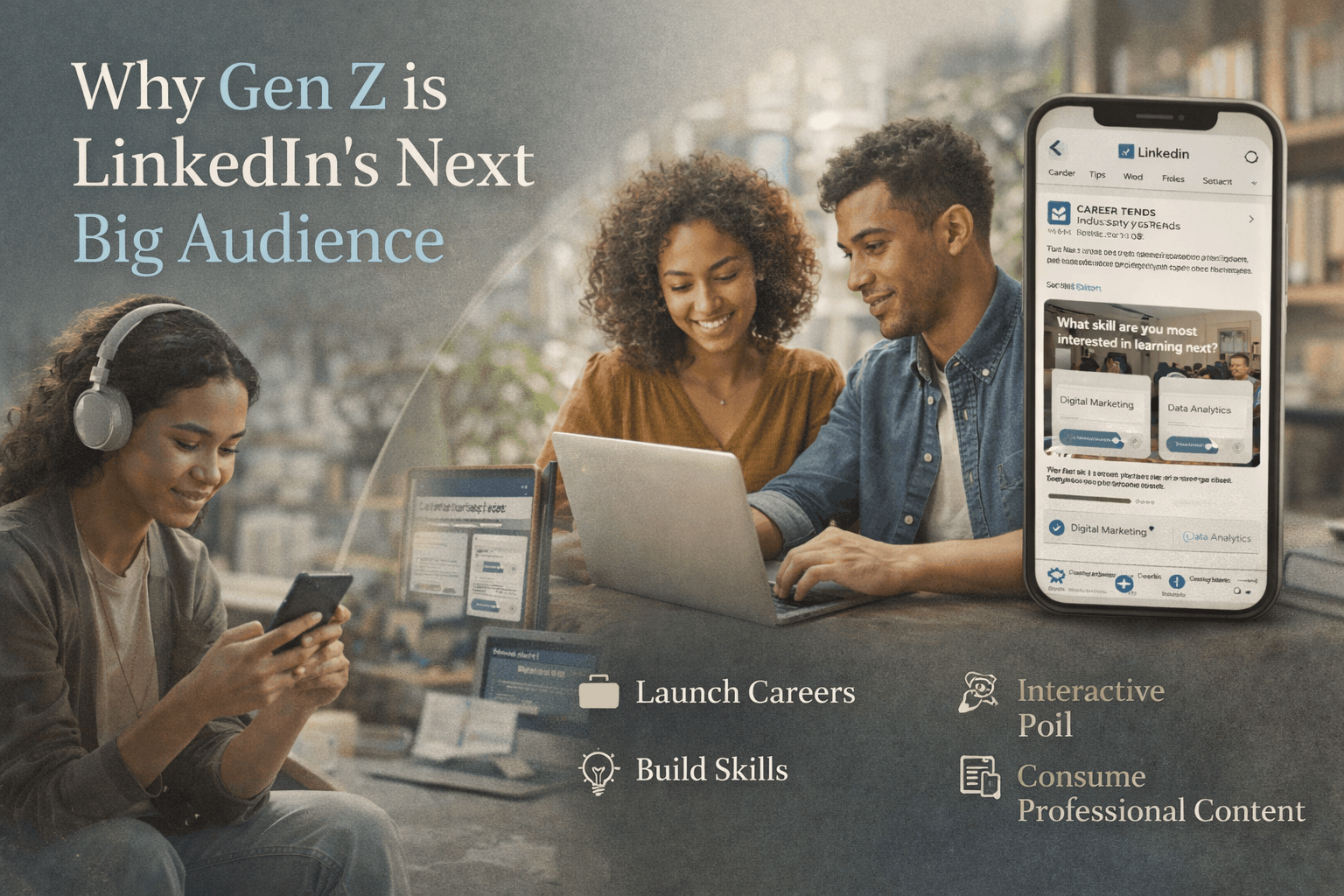
When people think of Generation Z on social media, platforms like TikTok and Instagram usually come to mind. But what many brands still overlook is one of the most powerful professional audiences emerging today: Gen Z on LinkedIn. In fact, LinkedIn now lists this group as its fastest-growing audience and that’s a signal every marketer should take seriously.
The Data Behind the Growth
Gen Z engagement on LinkedIn rising
71 % year over year
LinkedIn’s own research shows that Gen Z engagement measured by likes, comments, shares, and clicks has skyrocketed in recent years. Engagement among Zoomers on the platform is 2.7× higher than at the start of 2020, indicating far more active participation than in previous years.
More recent data also confirms this trend, with Gen Z engagement on LinkedIn rising 71 % year over year faster than any other generation on the platform.
What does this mean in real numbers?
While Millennials still make up a large portion of LinkedIn’s user base overall, the percentage of younger users particularly those aged roughly 18–24 is climbing rapidly as LinkedIn becomes a key destination for career building, networking, learning, and professional content.
Why Gen Z Cares About LinkedIn
Mobile-first behavior of Gen Z
is a major advantage for market
To many marketers, LinkedIn may still feel like a platform primarily for job seekers and corporate professionals. But Gen Z despite being early in their careers are not just passive observers. They’re actively using LinkedIn to:
- Network with peers and potential mentors
- Discover jobs and internships
- Learn new skills (especially in tech, business, analytics)
- Stay connected to industry trends and thought leadership
LinkedIn’s internal data shows that many Gen Z members join the platform right after high school or early in college, especially if they’re studying business or tech-related fields.
This cohort also spends significant time online overall with 71 % saying they spend over an hour on social media daily and most accessing LinkedIn on mobile devices.
This mobile-first behavior is a major advantage for marketers. Gen Z prefers content that’s easily digestible, quick to consume, and personalized, a format that LinkedIn increasingly supports through video and story formats.
The Opportunity: Influence Before Buying Power
One of the biggest reasons marketers should pay attention now is that influence precedes spending power. Gen Z may not have the highest disposable income yet but they’re rapidly shaping professional conversations and future buying decisions.
LinkedIn reports that many Gen Z professionals are already influencing B2B buying decisions, even if they’re earlier in their careers. This means brands that connect with them now aren’t just gaining followers they’re building advocates, future customers, and long-term brand affinity.
In other words, there’s strategic value in engaging Gen Z now both for current visibility and future market leadership.
How Marketers Should Tap This Audience on LinkedIn
So, if Gen Z is growing fast on LinkedIn, how should brands shift their strategy?
Here’s a detailed roadmap:
1. Prioritize Mobile-First Content
Gen Z overwhelmingly prefers mobile usage. Many spend more time on smartphones than computers when browsing social media.
That means:
- Create vertical or square video content
- Use compelling thumbnails and captions
- Optimize posts for quick, easy scrolling
Mobile-friendly content performs better because it aligns with how this audience naturally engages with LinkedIn.
Design a short, 30-second video series summarizing career tips or industry trends. These bite-sized pieces work well for mobile users scrolling during breaks or between tasks.
2. Be Interactive, Not Passive
Gen Z users don’t just want to consume content they want to participate in it. According to LinkedIn insights, this demographic likes interactive formats and content where they feel in control of the experience.
This means:
- Create polls and interactive posts
- Encourage comments and audience feedback
- Host live Q&A sessions or AMA posts
A B2B software brand could run weekly polls on trending tech problems that Gen Z professionals care about. Think “What’s the biggest barrier in your 2026 career goals?” and invite comments with personal stories.
(If you’re enjoying this article, you might like to subscribe to our bi-weekly email newsletter AMPlify. We share new blog articles, videos, and valuable ideas on AI, Marketing and Performance insights to grow your business. We assure you that we will never spam you, sell annoying courses or packages, or bug you with anything non-useful.
3. Collaborate Rather Than Control
Gen Z treats leaders differently from past generations. They’re less responsive to top-down messaging and prefer collaboration, co-creation, and community-driven narratives.
Instead of pushy ads, brands should:
- Feature employee stories
- Highlight real users and creators
- Let Gen Z voices take the lead
Invite Gen Z employees, interns, or micro-influencers from your industry to take over your LinkedIn page for a day. Let them share insights, challenges, and tips content that feels real rather than corporate.
4. Focus on Skill Building and Career Growth
Gen Z is hungry for skills. Courses around SEO, data analytics, programming, and hard skills consistently rank high among this audience’s interests.
This opens up a content opportunity:
- Create how-to videos and mini-lessons
- Share blog posts that teach tangible skills
- Host interactive workshops on LinkedIn Live
A marketing agency might produce a weekly series called “Skill Swap Saturdays” where experts teach actionable skills like building a personal brand, SEO basics, or digital storytelling live on LinkedIn.
Gen Z Is Already Here
Gen Z is no longer a future market they’re an active and growing audience on LinkedIn right now. For brands, this means a seismic shift in how content is created, shared, and optimized for professional engagement.
By embracing mobile-first formats, interactive posts, collaborative storytelling, and skill-based content, marketers can build authentic relationships with this generation before competitors catch on.
If you adapt your strategy today, you won’t just reach Gen Z you’ll win their attention, advocacy, and loyalty.